Trending...
- Heritage at South Brunswick Introduces New Ferndale Floorplan: The Largest Single-Family Home Design in the Community - 129
- Gateway Center Arena Announces Duane Curry as General Manger
- Mayor Brandon Johnson Launches Partnership with Lyft and United Way of Metro Chicago Providing Grocery Store Transportation Assistance for Seniors Following Recent Store Closures
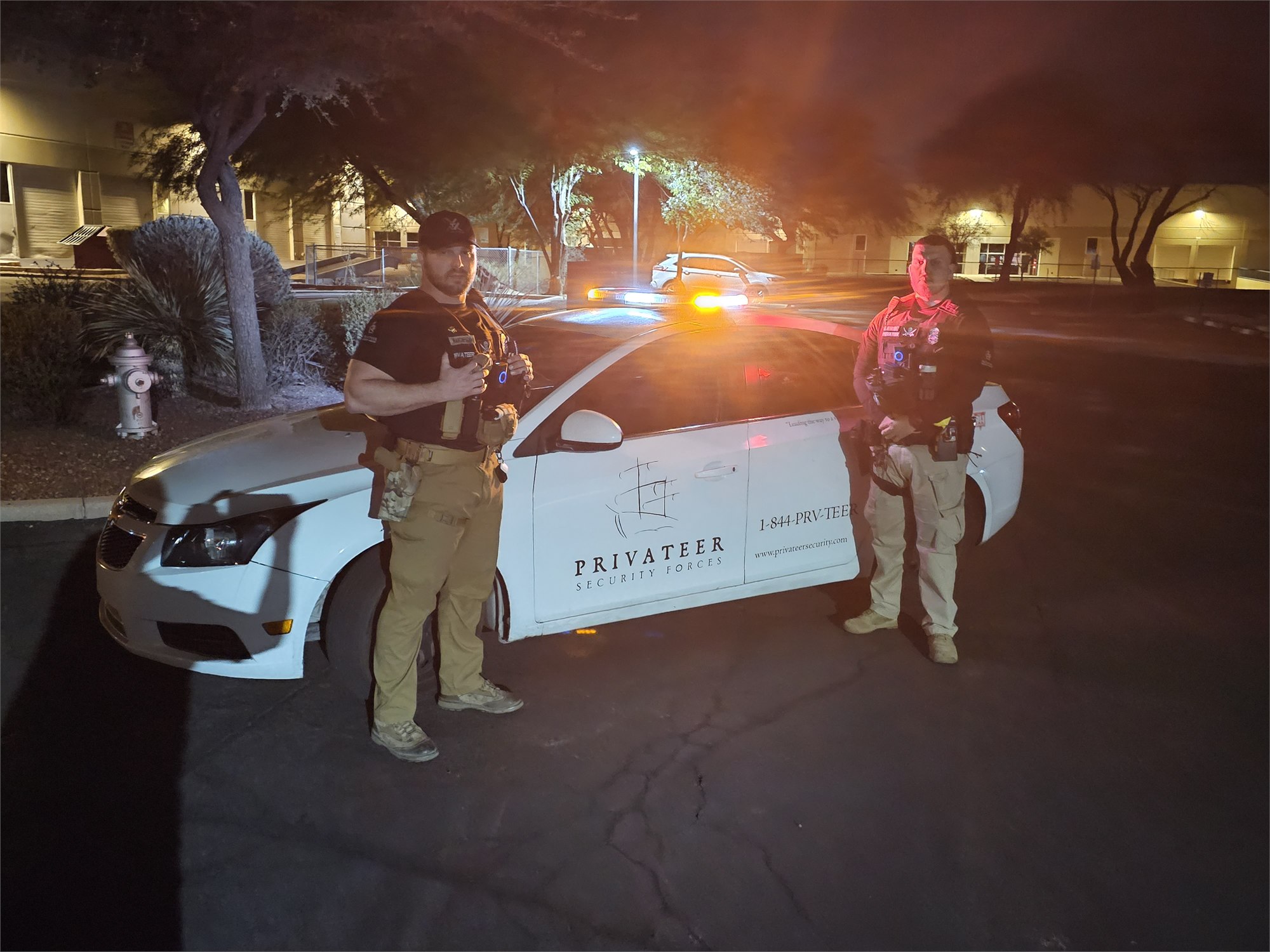
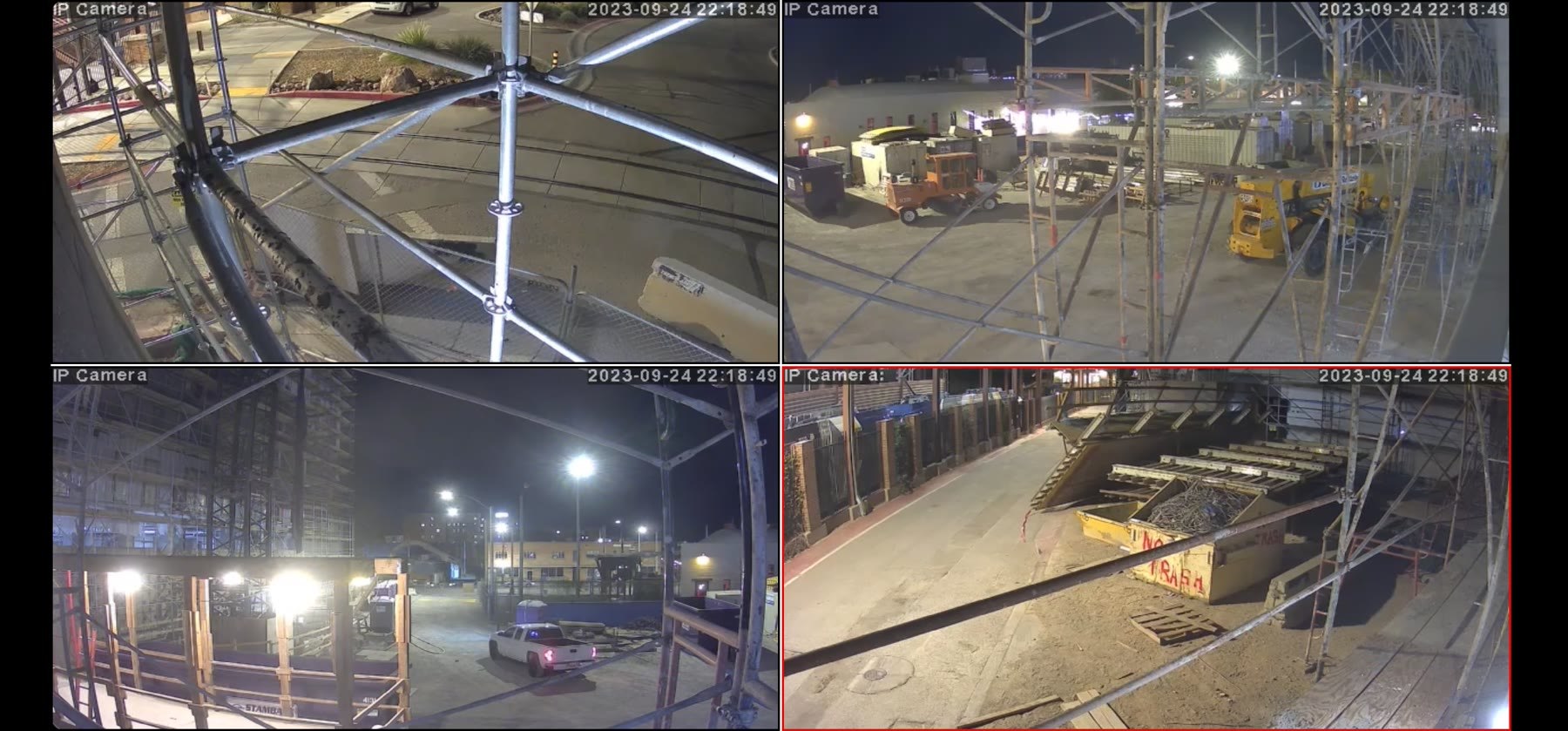
Forged in Tucson and engineered for the field, Privateer unites elite training, disciplined operatives and proprietary command technology in one formidable force built for the threats ahead.
TUCSON, Ariz. - illiNews -- Private security is often measured by what appears after the work is over: a dot on a map, a line on an invoice or a report describing an incident that has already happened. Privateer Security Forces, a Tucson company founded and led by Tucson native Cody Betzer, is building toward a different model—one in which training, field operations, evidence and the people being protected all work inside the same system.
"Where others are creating reports, we're creating a new way to do security," Betzer said.
That sentence is the thesis for the entire organization. Privateer is assembling an operating system for private security in Tucson: an academy that develops the operatives, a disciplined armed force that carries out the mission, an R&D shop that builds the tools, an installation division that connects the physical environment, and a software platform that turns every layer into one command structure.
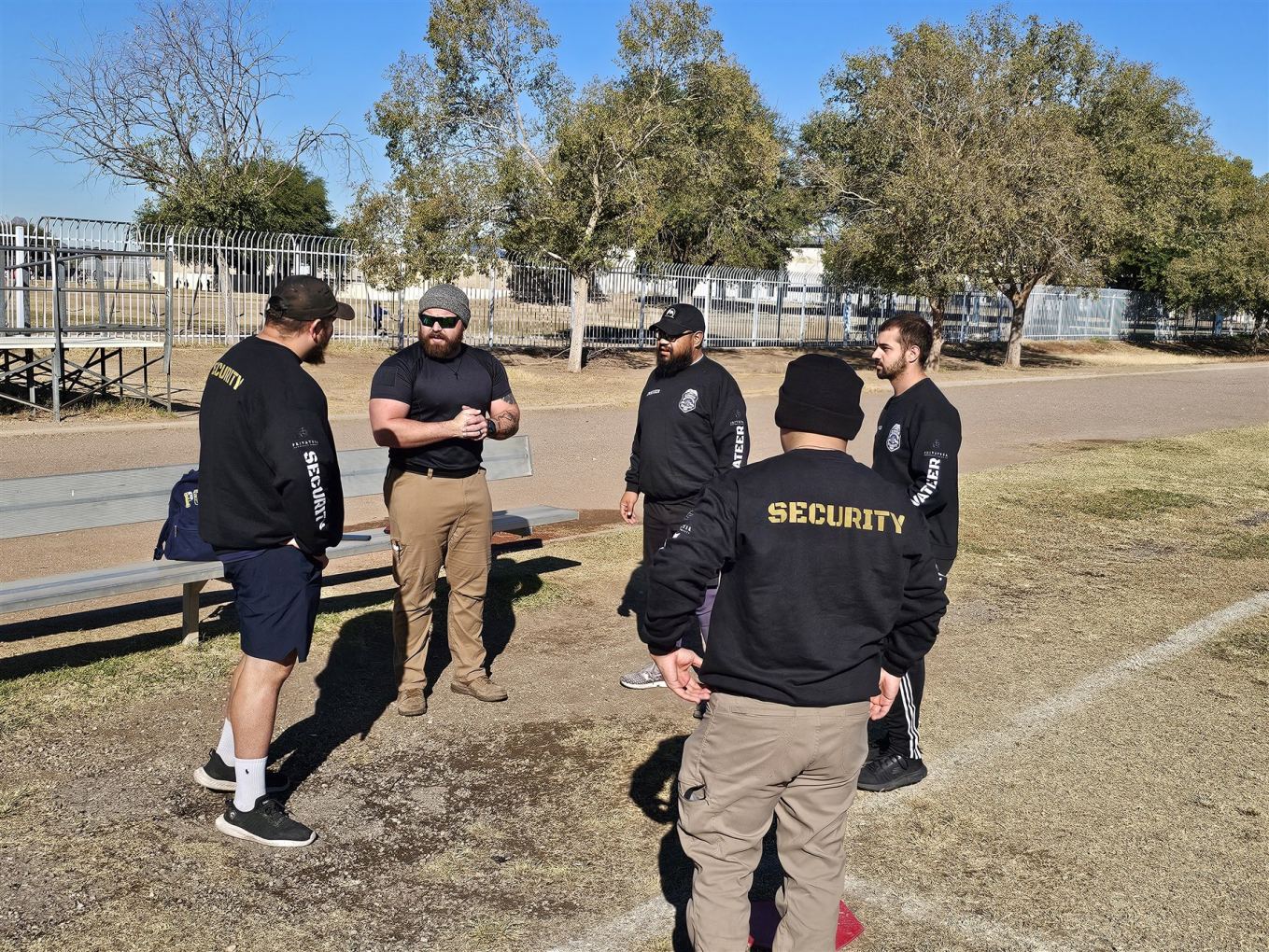
That model begins with Privateer's internal security academy. Operatives complete an 80-hour initial training program before independent field deployment, followed by continuing education every month. The curriculum spans the high-action and low-action sides of the profession: firearms proficiency, defensive and hand-to-hand tactics, medical response, jurisprudence and case-law study, review of the Arizona Revised Statutes, technology use, and the human skills needed to work with people in crisis. Betzer describes part of that preparation as social-worker-style training—a recognition that sound judgment, communication and an understanding of human behavior can matter as much as physical readiness.
The academy is the first layer of the product Privateer is building. Written doctrine, recurring education, field supervision, communications standards and technology are intended to produce an operative who can understand a site, make disciplined decisions and leave behind evidence that is useful to the client.
Privateer does not offer an unarmed-security tier. Every operative deployed to the field is armed, and use-of-force training is treated as a recurring discipline in law, judgment and tactics, with qualifications reinforced through continuing study and practice.
That preparation extends into three room-scale virtual scenario simulators supported by an extensive library of software and training tools. The systems place operatives inside immersive, rapidly changing encounters where communication, restraint, judgment and force decisions can be practiced repeatedly. It is the kind of simulation capability more commonly associated with well-funded police departments, built here for a private security force.
Privateer also says it is the first security company to use gamification as a formal tool for workforce development. Training participation, continued learning and demonstrated mastery become part of an internal system meant to improve morale, recognize progress and give operatives a reason to keep sharpening their skills.
The gamification program is designed to make recurring education more engaging, reward participation and mastery, strengthen morale and employee satisfaction, and keep operatives invested in sharpening their skills. Monthly education becomes part of the rhythm of employment, reinforcing the culture Privateer expects in the field.
Training is the foundation. Equipment is the next layer. Privateer describes itself as a research-and-development company as much as a security contractor: a Tucson operation that develops software, adapts communications systems, engineers camera platforms and can create a purpose-built technical solution when an existing product cannot solve a particular security problem.
Every operative receives a standard-issue body camera. Today, those cameras are loosely connected to Full Sail for selected automation, while Privateer develops its own modular camera systems for deeper integration. The company also equips every operative with a 4G-connected radio running Zello, then layers extensive custom automation over that communications channel. The result is an automated AI dispatcher that handles a substantial share of routine tasks, strengthens operative-safety procedures and keeps information moving between the field and command.
More on illi News
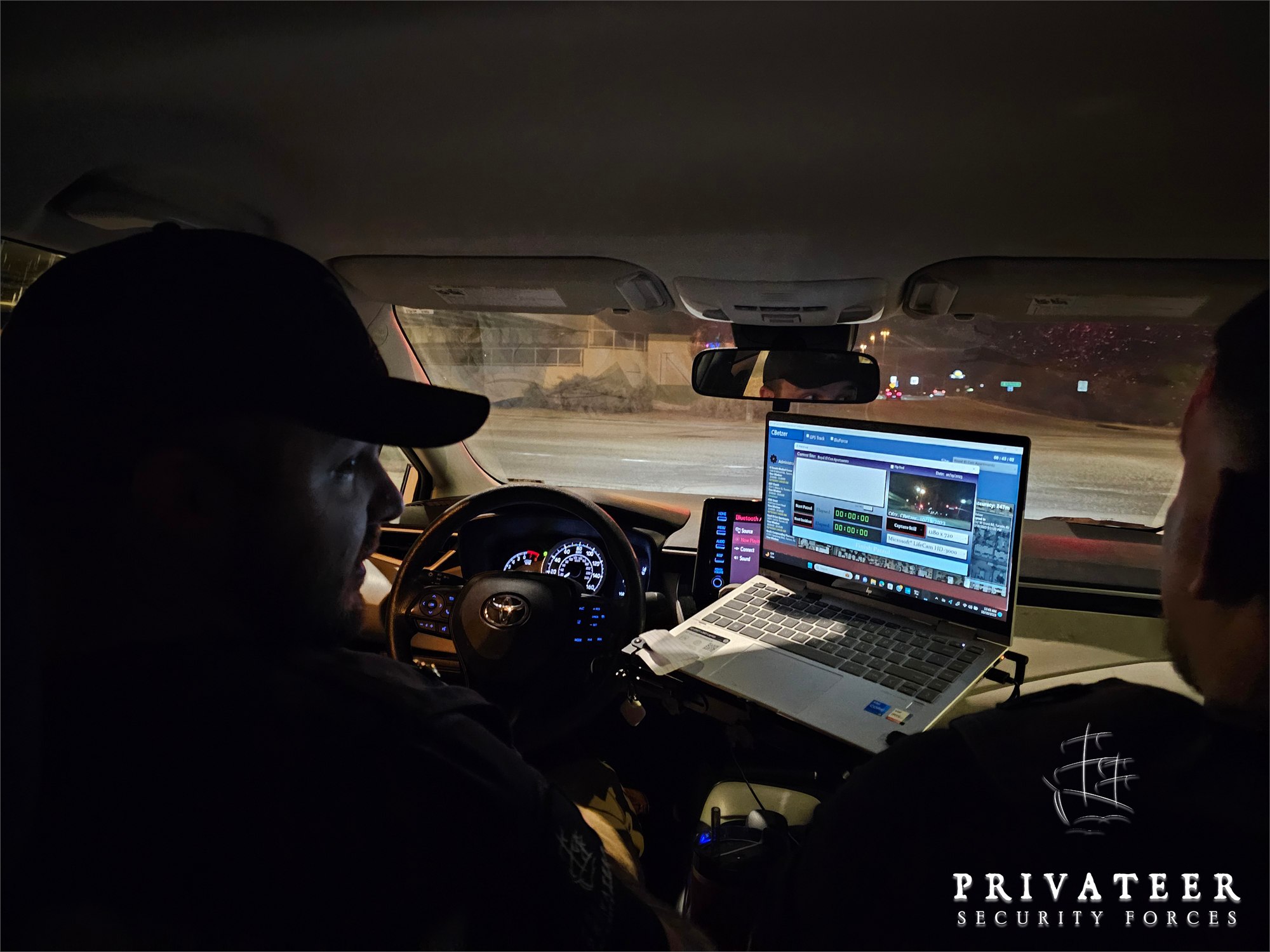
The same radios provide GPS data used to track operatives and vehicles in real time. Full Sail brings that movement together with alerts, assignments and other operational information in a map-based command view—a single screen designed to show leadership what matters across the company as events unfold.
That connectivity gives dispatch a living operational picture. Radio communications, vehicle positions, operative locations and active work come together in the same command environment. The automated dispatcher absorbs a substantial amount of repetitive coordination, while the map helps leadership maintain awareness across multiple sites and moving units. Privateer designed the system around a simple operational requirement: command should be able to see its people, vehicles and active operations in real time.
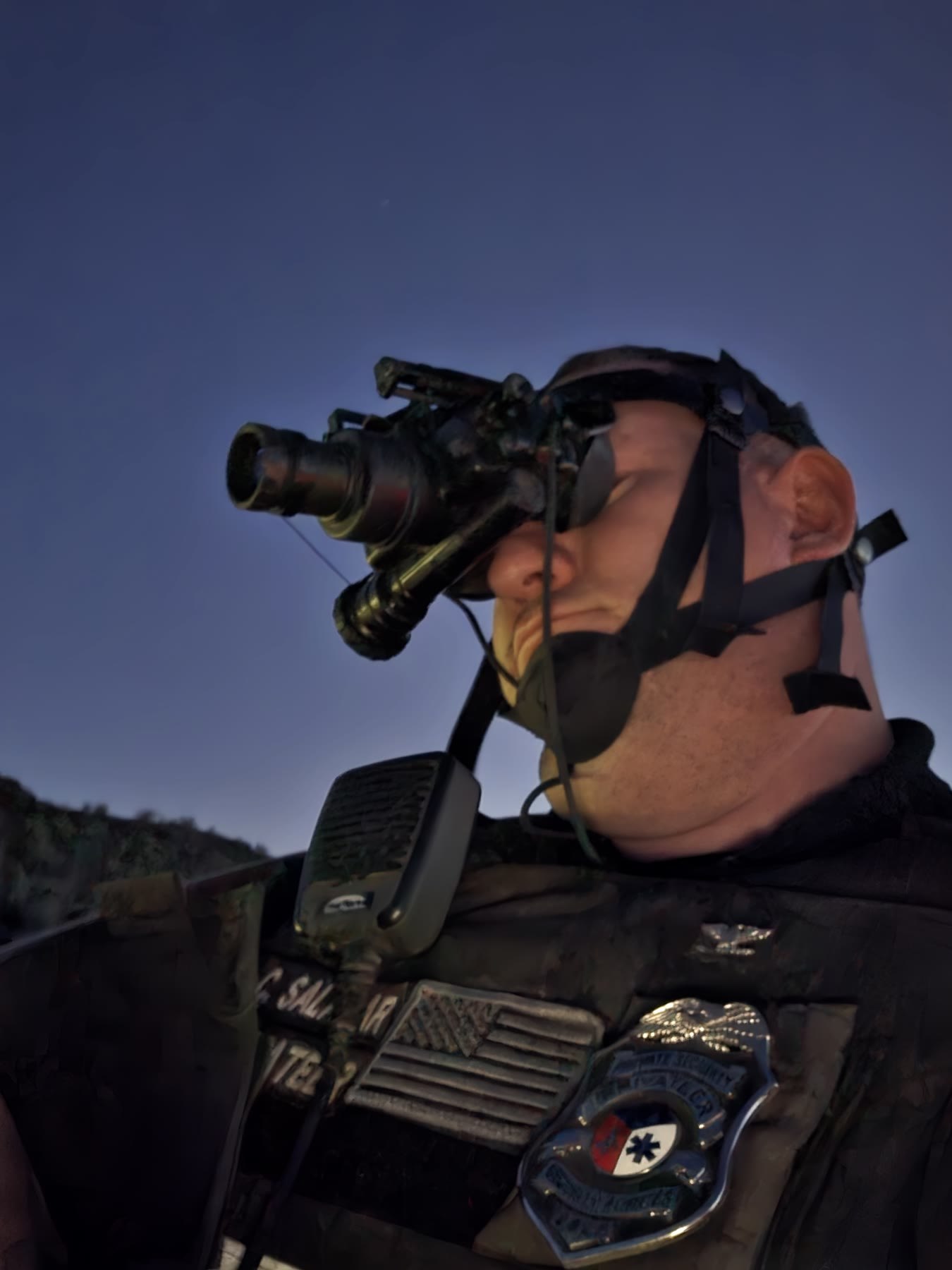
Equipment can expand with the assignment. Operatives may have access to drones, PepperBall launchers, riot gear, thermal cameras, motion sensors and AI-enabled cameras mounted on portable stations. Each tool is selected to extend what trained people can detect, document, communicate and safely accomplish in the field.
Privateer's information-technology and installation division designs and installs camera, connectivity and sensor systems, then integrates those systems with the operatives responsible for acting on what they reveal. If a contract presents a security challenge without an adequate off-the-shelf answer, the company has the capability to invent and deploy something new for that job. Privateer calls the result a fusion of technical reach and human judgment: the system can see and connect more, while disciplined people remain responsible for decisions and action.
A paramilitary structure gives that model a defined chain of command, standards and culture. Privateer is positioning itself for large, complex and operationally difficult contracts that demand far more than commodity guard work. The company's claim is that its client history and operating record already demonstrate what highly trained operatives, specialized equipment and centralized command can accomplish together.
The structure is built for the assignments Privateer considers its natural territory: large sites, difficult environments, layered security problems and jobs where ordinary guard coverage leaves too many gaps. Chain of command matters. Doctrine matters. Readiness, equipment accountability, communications discipline and the ability to improvise a technical answer all matter. Privateer points to its client history and operating record as proof that the organization can take on serious work without diluting its standards.
Privateer has now reached a milestone on the technology side of that program: the beta release of Full Sail, its proprietary security-operations software suite. The company considers this the first complete version because the platform now contains enough connected, distinctive capabilities to stand as a product in its own right. Development continues from that foundation.
For a local business owner, property manager or HOA board, Full Sail is designed as an operational control panel. A client can select a property and see its recent patrol, static-post and incident activity alongside contract and invoice information. The client can maintain post orders—including response codes, access instructions, special contacts, site-specific directions and supporting media—so the people setting the security priorities and the operatives carrying them out are working from the same instructions.
Clients can also create property-level access for managers and coordinators, manage tenant rosters and verification, control where incident reports and daily activity summaries are delivered, review contracts and renewals, and follow invoice status and billing records. Responsible people can make and review operational changes inside the system that drives the service, with far less dependence on scattered email chains.
The client dashboard gathers the working relationship into one place. Property-aware tools connect My Team, My Tenants, post orders, the incident archive, invoices, contracts, company documentation and patrol records. Operational cards can show recent patrol completions and shift-clock activity. Clients can move from a high-level view of coverage into the underlying record, see who performed the work, review what happened and reach the evidence connected to it. That is the control-panel experience Betzer compares to directing security almost like a video game—clear options, visible units, current information and actions that reach real operatives in the field.
More on illi News
The visibility continues all the way to the patrol record. Clients can review the assigned operative, property, check-in and check-out times, patrol duration and activity narrative. They can load recorded radio traffic and, when the field recording is successfully captured and uploaded, watch or download the patrol's dashcam footage. Full Sail begins recording with the patrol session, linking the physical visit to a reviewable operational record and making the service traceable far beyond a location marker.
When an incident generates video evidence, Full Sail can go further. Its incident-evidence system can index the video into searchable moments and expose transcripts, visible text, scene labels and recognized entities. The practical value is immediate: a client looking for a vehicle, a spoken phrase, a person or a moment in a long recording can search the evidence and move directly toward the relevant material.
Privateer is carrying the same principle into patrol video: footage should become usable evidence, searchable through ordinary text and connected to the operational record. Body-camera automation remains loosely connected today, dashcam recording is already tied to patrol activity, and the modular camera systems in development are intended to deepen that relationship. Each step moves field video closer to the rest of the operational record.
For residential communities, the system creates a second layer of participation. Residents can see incident updates that property management has approved for the community feed, including approved media and full report details. The resident dashboard also shows documented patrols, approved reports, patrol hours and static-post hours for the property.
Residents can file an Away Notice so security knows when a home is expected to be unoccupied. They can enter a House Guest notice to identify an expected visitor or a House Party notice to give security context before a complaint or call for service. They can send non-urgent concerns and suspicious activity directly to security through a documented reporting channel. Where a property enables them, community notices, fines and citation records can also be published through the resident portal.
Those notices can carry the details field teams actually need: dates and times, guest names, vehicle information, gate instructions and other context surrounding expected activity. Active notices remain available through the resident experience until their end time passes. Approved incident updates can include shared media and full report documentation, while the property controls which material enters the community feed. Residents gain a direct channel into the same operating system used by management and security.
Management retains control of what becomes community information. An incident can be placed "On Air" for residents or kept "Off Air" when privacy, sensitivity or an active matter makes broader disclosure inappropriate. The result is a client-controlled community information system tied to documented events, with privacy and operational sensitivity built into the publishing decision.
Privateer is also using Full Sail to support service models it developed around the realities of field work. A FlashThrough, for example, is a rapid vehicle-based visual inspection designed to deliver visible deterrence and a documented check at a lower scope and cost than a full patrol when conditions allow. If an operative observes suspicious activity, the FlashThrough escalates into a full patrol and the system records the additional response. More involved assignments can incorporate full patrols, static coverage, access control, visitor and resident verification, property checks, incident response and specialized site operations.
"We have so many features that add value to security—tangible value that tenants and landowners can see and feel and use," Betzer said. "Not just a dot on a map."
The larger Tucson story encompasses far more than security software. Privateer is building the academy, doctrine, communications, field equipment, evidence systems, resident tools and client controls as one program. The software gives clients a way to see and direct the work; trained operatives give those directions force in the real world.
Betzer believes Tucson is exactly where that kind of organization should be built.
Tucson is the birthplace, proving ground and engineering floor for the program. The academy, dispatch automations, command view, client and resident portals, installation work and emerging camera systems are being developed around the problems Privateer encounters here. The city supplies the friction that forces invention and the independent streak that makes an unusual organization possible.
"I was born in Tucson," he said. "This city has problems, but it's also the perfect city to breed this kind of organization. Tucson has a fair share of inventors and innovators. I like to think I am one of these."
Privateer expects Full Sail to keep growing beyond the beta milestone. Its immediate purpose is already clear: turn security from a service people pay for and hope is working into a program they can see, understand and actively use.
Learn more about the Full Sail platform at https://www.privateersecurity.com/software.html and Privateer's training program at https://www.privateersecurity.com/academy.html.
About Privateer Security Forces
Privateer Security Forces is a Tucson-based security company combining an internal training academy, recurring operative education, written field doctrine, security personnel and proprietary technology. The company provides patrol, static, residential, commercial and specialized security services while developing Full Sail, its integrated security-operations platform.
"Where others are creating reports, we're creating a new way to do security," Betzer said.
That sentence is the thesis for the entire organization. Privateer is assembling an operating system for private security in Tucson: an academy that develops the operatives, a disciplined armed force that carries out the mission, an R&D shop that builds the tools, an installation division that connects the physical environment, and a software platform that turns every layer into one command structure.
That model begins with Privateer's internal security academy. Operatives complete an 80-hour initial training program before independent field deployment, followed by continuing education every month. The curriculum spans the high-action and low-action sides of the profession: firearms proficiency, defensive and hand-to-hand tactics, medical response, jurisprudence and case-law study, review of the Arizona Revised Statutes, technology use, and the human skills needed to work with people in crisis. Betzer describes part of that preparation as social-worker-style training—a recognition that sound judgment, communication and an understanding of human behavior can matter as much as physical readiness.
The academy is the first layer of the product Privateer is building. Written doctrine, recurring education, field supervision, communications standards and technology are intended to produce an operative who can understand a site, make disciplined decisions and leave behind evidence that is useful to the client.
Privateer does not offer an unarmed-security tier. Every operative deployed to the field is armed, and use-of-force training is treated as a recurring discipline in law, judgment and tactics, with qualifications reinforced through continuing study and practice.
That preparation extends into three room-scale virtual scenario simulators supported by an extensive library of software and training tools. The systems place operatives inside immersive, rapidly changing encounters where communication, restraint, judgment and force decisions can be practiced repeatedly. It is the kind of simulation capability more commonly associated with well-funded police departments, built here for a private security force.
Privateer also says it is the first security company to use gamification as a formal tool for workforce development. Training participation, continued learning and demonstrated mastery become part of an internal system meant to improve morale, recognize progress and give operatives a reason to keep sharpening their skills.
The gamification program is designed to make recurring education more engaging, reward participation and mastery, strengthen morale and employee satisfaction, and keep operatives invested in sharpening their skills. Monthly education becomes part of the rhythm of employment, reinforcing the culture Privateer expects in the field.
Training is the foundation. Equipment is the next layer. Privateer describes itself as a research-and-development company as much as a security contractor: a Tucson operation that develops software, adapts communications systems, engineers camera platforms and can create a purpose-built technical solution when an existing product cannot solve a particular security problem.
Every operative receives a standard-issue body camera. Today, those cameras are loosely connected to Full Sail for selected automation, while Privateer develops its own modular camera systems for deeper integration. The company also equips every operative with a 4G-connected radio running Zello, then layers extensive custom automation over that communications channel. The result is an automated AI dispatcher that handles a substantial share of routine tasks, strengthens operative-safety procedures and keeps information moving between the field and command.
More on illi News
- Canadian Aerospace Defence Talent Expo (CADTE) Launches National TalentThread Initiative to Strengthen Canada's Future Workforce
- 5.6 Million EUR in Q1 Project Awards for Integrated IoT Solutions / Data Analytics Subsidiary of Smart City Developer: Affluence (Stock Symbol: AFFU)
- Merger Advancement For Embodied AI Co in Robotic Systems Serving High Value Hospitality, Gaming & Real Estate Sectors: MBody AI Corp. (NAS DAQ: MBAI)
- Hollywood In Pixels Announces Honorees for The 9th Silver PIXel Awards
- New Research Finds a Good Deal Is All It Takes to Get Americans Booking a Last-Minute Vacation — and Most Already Have One on Their Mind
The same radios provide GPS data used to track operatives and vehicles in real time. Full Sail brings that movement together with alerts, assignments and other operational information in a map-based command view—a single screen designed to show leadership what matters across the company as events unfold.
That connectivity gives dispatch a living operational picture. Radio communications, vehicle positions, operative locations and active work come together in the same command environment. The automated dispatcher absorbs a substantial amount of repetitive coordination, while the map helps leadership maintain awareness across multiple sites and moving units. Privateer designed the system around a simple operational requirement: command should be able to see its people, vehicles and active operations in real time.
Equipment can expand with the assignment. Operatives may have access to drones, PepperBall launchers, riot gear, thermal cameras, motion sensors and AI-enabled cameras mounted on portable stations. Each tool is selected to extend what trained people can detect, document, communicate and safely accomplish in the field.
Privateer's information-technology and installation division designs and installs camera, connectivity and sensor systems, then integrates those systems with the operatives responsible for acting on what they reveal. If a contract presents a security challenge without an adequate off-the-shelf answer, the company has the capability to invent and deploy something new for that job. Privateer calls the result a fusion of technical reach and human judgment: the system can see and connect more, while disciplined people remain responsible for decisions and action.
A paramilitary structure gives that model a defined chain of command, standards and culture. Privateer is positioning itself for large, complex and operationally difficult contracts that demand far more than commodity guard work. The company's claim is that its client history and operating record already demonstrate what highly trained operatives, specialized equipment and centralized command can accomplish together.
The structure is built for the assignments Privateer considers its natural territory: large sites, difficult environments, layered security problems and jobs where ordinary guard coverage leaves too many gaps. Chain of command matters. Doctrine matters. Readiness, equipment accountability, communications discipline and the ability to improvise a technical answer all matter. Privateer points to its client history and operating record as proof that the organization can take on serious work without diluting its standards.
Privateer has now reached a milestone on the technology side of that program: the beta release of Full Sail, its proprietary security-operations software suite. The company considers this the first complete version because the platform now contains enough connected, distinctive capabilities to stand as a product in its own right. Development continues from that foundation.
For a local business owner, property manager or HOA board, Full Sail is designed as an operational control panel. A client can select a property and see its recent patrol, static-post and incident activity alongside contract and invoice information. The client can maintain post orders—including response codes, access instructions, special contacts, site-specific directions and supporting media—so the people setting the security priorities and the operatives carrying them out are working from the same instructions.
Clients can also create property-level access for managers and coordinators, manage tenant rosters and verification, control where incident reports and daily activity summaries are delivered, review contracts and renewals, and follow invoice status and billing records. Responsible people can make and review operational changes inside the system that drives the service, with far less dependence on scattered email chains.
The client dashboard gathers the working relationship into one place. Property-aware tools connect My Team, My Tenants, post orders, the incident archive, invoices, contracts, company documentation and patrol records. Operational cards can show recent patrol completions and shift-clock activity. Clients can move from a high-level view of coverage into the underlying record, see who performed the work, review what happened and reach the evidence connected to it. That is the control-panel experience Betzer compares to directing security almost like a video game—clear options, visible units, current information and actions that reach real operatives in the field.
More on illi News
- GitKraken Introduces GitLens 19, Bringing Human and AI Workflows Together in One Workbench
- Tales of Wonder and Dread will Celebrate Anniversary with a Classic
- LĪNA Universal Balm Nominated for "Best Clean Skincare Product" at CertClean Beauty Awards
- Naperville Police Arrest Knife Wielding Man
- Naperville: Special Citywide Brush Collection Taking Place Beginning Week of Aug. 17
The visibility continues all the way to the patrol record. Clients can review the assigned operative, property, check-in and check-out times, patrol duration and activity narrative. They can load recorded radio traffic and, when the field recording is successfully captured and uploaded, watch or download the patrol's dashcam footage. Full Sail begins recording with the patrol session, linking the physical visit to a reviewable operational record and making the service traceable far beyond a location marker.
When an incident generates video evidence, Full Sail can go further. Its incident-evidence system can index the video into searchable moments and expose transcripts, visible text, scene labels and recognized entities. The practical value is immediate: a client looking for a vehicle, a spoken phrase, a person or a moment in a long recording can search the evidence and move directly toward the relevant material.
Privateer is carrying the same principle into patrol video: footage should become usable evidence, searchable through ordinary text and connected to the operational record. Body-camera automation remains loosely connected today, dashcam recording is already tied to patrol activity, and the modular camera systems in development are intended to deepen that relationship. Each step moves field video closer to the rest of the operational record.
For residential communities, the system creates a second layer of participation. Residents can see incident updates that property management has approved for the community feed, including approved media and full report details. The resident dashboard also shows documented patrols, approved reports, patrol hours and static-post hours for the property.
Residents can file an Away Notice so security knows when a home is expected to be unoccupied. They can enter a House Guest notice to identify an expected visitor or a House Party notice to give security context before a complaint or call for service. They can send non-urgent concerns and suspicious activity directly to security through a documented reporting channel. Where a property enables them, community notices, fines and citation records can also be published through the resident portal.
Those notices can carry the details field teams actually need: dates and times, guest names, vehicle information, gate instructions and other context surrounding expected activity. Active notices remain available through the resident experience until their end time passes. Approved incident updates can include shared media and full report documentation, while the property controls which material enters the community feed. Residents gain a direct channel into the same operating system used by management and security.
Management retains control of what becomes community information. An incident can be placed "On Air" for residents or kept "Off Air" when privacy, sensitivity or an active matter makes broader disclosure inappropriate. The result is a client-controlled community information system tied to documented events, with privacy and operational sensitivity built into the publishing decision.
Privateer is also using Full Sail to support service models it developed around the realities of field work. A FlashThrough, for example, is a rapid vehicle-based visual inspection designed to deliver visible deterrence and a documented check at a lower scope and cost than a full patrol when conditions allow. If an operative observes suspicious activity, the FlashThrough escalates into a full patrol and the system records the additional response. More involved assignments can incorporate full patrols, static coverage, access control, visitor and resident verification, property checks, incident response and specialized site operations.
"We have so many features that add value to security—tangible value that tenants and landowners can see and feel and use," Betzer said. "Not just a dot on a map."
The larger Tucson story encompasses far more than security software. Privateer is building the academy, doctrine, communications, field equipment, evidence systems, resident tools and client controls as one program. The software gives clients a way to see and direct the work; trained operatives give those directions force in the real world.
Betzer believes Tucson is exactly where that kind of organization should be built.
Tucson is the birthplace, proving ground and engineering floor for the program. The academy, dispatch automations, command view, client and resident portals, installation work and emerging camera systems are being developed around the problems Privateer encounters here. The city supplies the friction that forces invention and the independent streak that makes an unusual organization possible.
"I was born in Tucson," he said. "This city has problems, but it's also the perfect city to breed this kind of organization. Tucson has a fair share of inventors and innovators. I like to think I am one of these."
Privateer expects Full Sail to keep growing beyond the beta milestone. Its immediate purpose is already clear: turn security from a service people pay for and hope is working into a program they can see, understand and actively use.
Learn more about the Full Sail platform at https://www.privateersecurity.com/software.html and Privateer's training program at https://www.privateersecurity.com/academy.html.
About Privateer Security Forces
Privateer Security Forces is a Tucson-based security company combining an internal training academy, recurring operative education, written field doctrine, security personnel and proprietary technology. The company provides patrol, static, residential, commercial and specialized security services while developing Full Sail, its integrated security-operations platform.
Source: Privateer Security Forces
Filed Under: Business, Construction
0 Comments
Latest on illi News
- Affiliate in Pakistan Earns $477.75 From a Single Call Using Lead Smart Inc's Public Payout Data
- Hot Bat Box Introduces a New Approach to Cold-Weather Bat Warming
- Hardwood Floor Installation Options Demystified: Premier Custom Hardwood Flooring Releases Ultimate Selection Guide for Property Owners
- Patent-Pending Disaster Bag Introduces Innovative Approach to Vehicle Flood Protection
- Ignazio Arces Wins Stevie® Award for Maverick of the Year at the 2026 International Business Awards
- Tickeron Highlights AI Trading Agent Performance Across Multiple Market Sectors
- Stop Bleeding Cash on Mediocre Talent. Build a Powerhouse Remote Team Instead
- Crownlight Strategies® Announces Federal Trademark Registration
- New Book Calls 'Sense of Belonging' the Missing Link in Student Success
- Igbozue Connecticut USA Celebrates 2026 Summer Family Picnic
- KT Medical Staffing Addresses the Questions Families Forget to Ask Before Bringing Private Nursing Care Home
- Private Autopsies Give Arizona Families Answers After Nursing Home and Care Facility Deaths
- OPUS Global Data Solutions Launches Food Trader Plus, Bringing Operational Control and Deal-Level Profit Visibility to Food Brokers
- Flexlid Introduces an Expandable, Multipurpose Approach to Kitchen Sink Coverage
- Mayor Brandon Johnson Signs Executive Order Creating Enhanced Regulatory Review for Data Centers in Chicago and Calls for a Temporary Data Center Moratorium
- Phinge CEO DeMaio Unveils Speech to Congress: User Data Sovereignty vs Tech Surveillance Capitalism, Asserting Foundational 2021 App-Less Patents & IP
- Michael Maertens Hired as Century Fasteners Corp. – Chief Financial Officer
- Built to Last: Why BSI Is Among the Nation's Fastest-Growing Companies, and One of Its Best Places to Work
- Tube N Grow Introduces an Integrated Approach to Vertical Home Gardening
- Chicago: Mayor Brandon Johnson Announces Appointment of Ashlee Gabrysch as Chief Financial Officer